Modern generosity from business to the breakfast table
IN THIS EMAIL
To those who feel pressured to give
Generous women of the Bible: Sheerah
Cause explorations: Homelessness
To Those Who Feel Pressured to Give
Kristin Hammett / The Signatry
In the last week, I’ve been approached with three different donation appeals. I’m also attending a gala this weekend. Clearly, it is the spring fundraising season. In case you are in a similar situation, I thought I’d share my insights on how to navigate when you feel pulled by a multitude of worthy asks.
Ask yourself:
1. Does it fit our focus areas? My husband and I have determined three areas where we focus our giving: the local church, flourishing families, and safe water. That doesn’t mean we don’t give outside of those areas, but this framework helps us determine where to direct the bulk of our giving.
2. Is there a relational connection I want to support? Consider who is asking. Some of our giving priorities are based on relationships. For example, one of our dearest friends has a chronic disease. The personal connection has moved that fundraising effort higher up on our list.
3. Is this a priority? A few years ago, a successful businessman I respect shared how he and his wife categorize their giving into “A, B, and C” levels. “A” organizations represent their highest conviction areas—strategic, ongoing investment. “B” organizations are meaningful but require more discussion and typically receive mid-level gifts. “C” organizations are those each person can respond to individually, with the understanding that gifts are smaller and more discretionary.
Generosity can feel pressured or reactive at times. If you want to stay focused on strategic impact, it can help to consider these questions about your existing priorities and relationships.
Using a donor advised fund (DAF) usually makes it easier to stay focused on these things. Adding structure serves to deepen your generosity—and your impact as a result.
How a DAF helps:
Reframes giving as stewardship, not on-demand. I once heard a man say that, although there was money already sitting in his DAF, having to log in and recommend a grant built in some delay into the giving process. That delay gave him time to discern whether this was truly an area he wanted to invest in.
You make the rules. Let’s be honest: sometimes we just want something to blame. So, blame the rules you set. Determine how often you will recommend grants from a DAF and stick to it. When the requests come at you (because sometimes that’s how it feels), you can “blame” the rules:
"We make giving decisions through our DAF quarterly.”
“Our DAF’s guidelines are focused on education, food insecurity, and evangelism.”
Space to make a strategic decision. Spring charity galas aren’t the only source of pressure. I know some families also feel pressure when they have a big liquidity event or other financial windfall. In these cases, a DAF creates breathing room. You can give a large gift (or even an asset) to a DAF, let the chaos subside, and then make time to re-focus on your generosity and impact priorities.
You can learn more about DAFs on The Signatry’s website. My hope is that, even in this busy season, you can experience the joy of generosity and strategic impact.
Generous Women of the Bible: Sheerah
Have you heard the name Sheerah?
She’s only mentioned once in the Bible, but her legacy is generational.
“Now his daughter was Sheerah, who built Lower and Upper Beth Horon and Uzzen Sheerah…” (1 Chronicles 7:24)
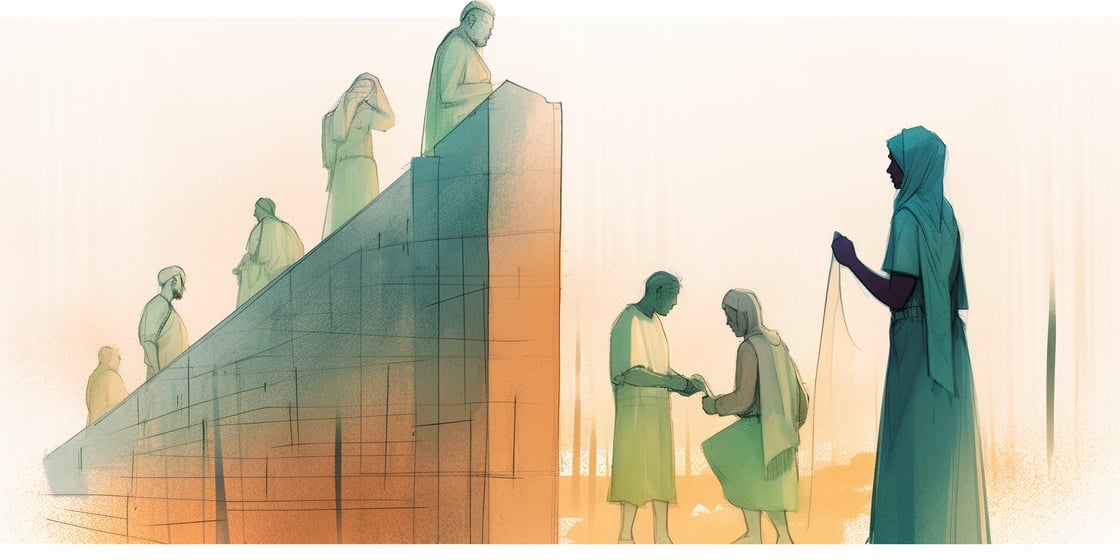
As the daughter of a family trying to rebuild after experiencing devastating tragedy, Sheerah grew up to build three fortified cities in strategic locations. (Learn what happened later thanks to these cities.)
We don’t know more about Sheerah’s life or why she wanted to channel her time and skills into building these cities. We do know that she transformed a legacy of rebellion and tragedy into a legacy of security, growth, and faithfulness to the people of God.
It’s no easy task to work with God to redeem pain into prosperity. It requires trust and a generous spirit willing to give God the parts of our stories we’d rather keep locked away—not to mention the skills and resources we’d rather use for our own ends.
I enjoy all of Christians for Impact’s cause reports, but this one gives me extra food for thought: housing stability is one of the causes I care about most, but it’s one they “rarely recommend.”
Why the hesitation? CFI view impact through a Christian effective altruist lens—a school of thought that asks, “How can a single dollar do the most good?” and applies a specific definition of “good.” You can read CFI’s approach here.
This report covers the scale and severity of homelessness (in the US and UK) and the most effective interventions. Seeing the data and research laid out like this is always helpful for me.
Check out the rest of the article to learn why CFI does not recommend focusing your giving on homelessness. I’m still mulling on their reasons.
How does their understanding of impact align with yours?
This does not constitute nor does The Signatry provide legal, tax, financial or other professional advice. You should consult professional advisors concerning the legal, tax, or financial consequences of your charitable activities.