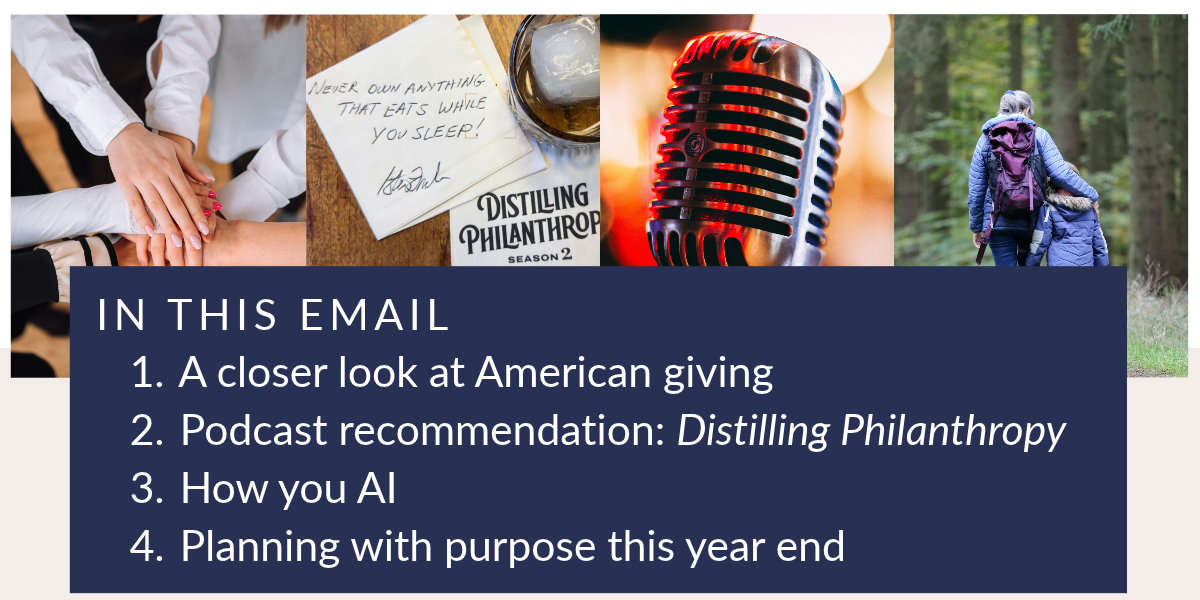
Americans gave more than $600 billion to charity for the first time in 2025, according to Giving USA 2026: The Annual Report on Philanthropy for the Year 2025. Amid this record-setting year, one finding stands out: religion remained the largest recipient of charitable dollars, receiving 23% of total giving, or about $152 billion.
Yet that share has fallen considerably from 53% in 1985.
The shift hints at a more nuanced story. Giving to religion grew 2.4% in 2025, but after adjusting for inflation, it declined slightly. Over the past two decades, strictly religious giving—primarily to congregations, missions, and religious media—has seen little real growth. (It is worth noting that the “religion” category may not capture all faith-inspired generosity; donations to faith-based schools, hospitals, or social service organizations may be counted in other categories.)
These numbers offer an opportunity to reflect on how faith and generosity are evolving—and how we support the ministries and organizations putting our values into action.
Explore more takeaways from what Giving USA 2026 reveals about charitable giving and what may lie ahead:
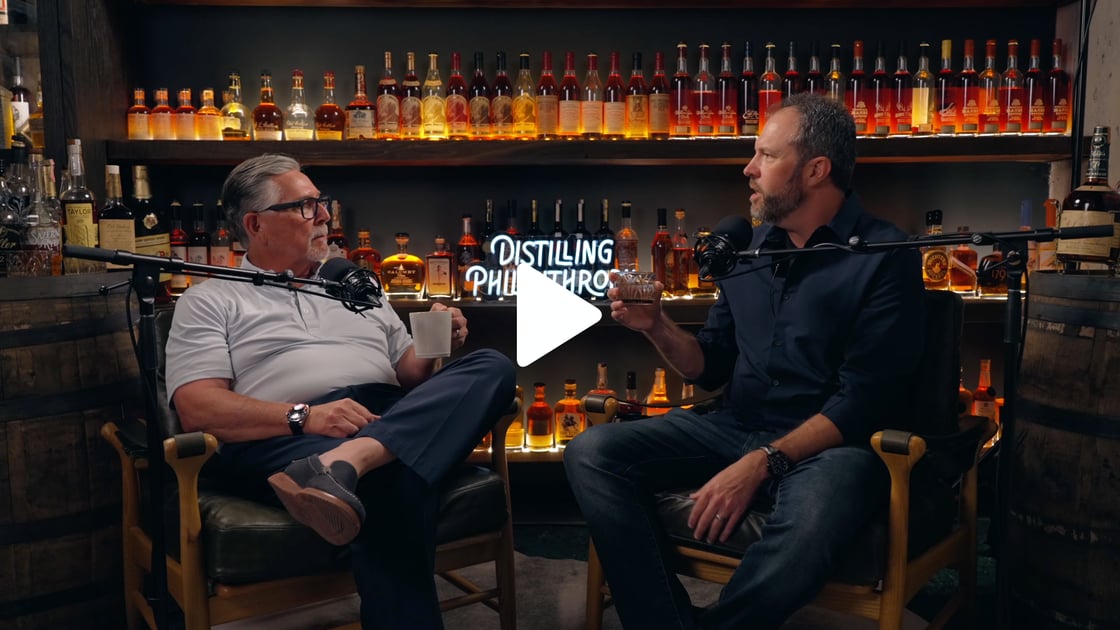
“I was a really good owner; I had done a good job at that. But I hadn’t been a great steward.” That’s how Steve French, our President and CEO, summarized one of the early lessons he learned in business during an appearance on the podcast Distilling Philanthropy.
Speaking with host Josh Stamer about giving, legacy, and impact, their 45-minute conversation explores:
Philanthropy as problem solving
The most finite resource
Being right vs reconciled in business and life
What makes or breaks an organization
Embracing failure, reframing fear, and leading with tenacity
Drawing on decades of entrepreneurial and philanthropic experience, Steve encourages moving beyond just having good intentions to giving with a true sense of purpose, and your role in evaluating impact and accountability with the organizations you support.
Recently, we asked readers to share their approach to the adoption of artificial intelligence (AI) in business. Most of the answers had two elements in common: an acknowledgement of AI’s practical benefits and the need for discernment about its limits.
One business owner, Alyssa Whetstone of Alyssa Whetstone Art in Farmington, MN, shared that she finds AI useful for repurposing the content she creates. As an artist who offers supplies, kits, and education focused on techniques for beginners to develop their skills, she uses AI to assist in non-creative aspects. She develops the original video and transcript, which Claude turns into a variety of media: Instagram reel scripts, blog posts, Threads posts, Pinterest posts, and others. But the creative work remains personal: “I will never use AI for any of my videos or images, specifically since I am an art-focused business. I create all my own art and teach others how to create art too. AI can’t do that.”
Another business owner, Marty Andrews of Martin P. Andrews, Manufacturer’s Representative in Fayetteville, NY, finds that AI use has become inevitable. Customer expectations and other demands drive the use of AI tools: "The cold shower wake up is that AI is man made." He maintains reverence for God’s creation—life, soul, and spirit—and remains acutely aware of the potential misuse and biases that may shape responses generated by man-made tools.
These perspectives underscore the importance of using the technology thoughtfully, with an awareness of both its capabilities and limitations. Likewise, The Signatry approaches the adoption of AI with caution and discretion: "At The Signatry, AI is a tool that absorbs low-value tasks and amplifies the uniquely human work of walking alongside donors,” explains Chief Information Officer Trevor Bunch. "Every role holds a mix: work where AI could take the first pass, work where AI can help but your judgment leads, and work that should stay with you, like discernment, relationships, prayer, and presence. Our goal is to let AI carry more of the routine work so that we have more time and energy for the work that most needs a person."
One tool that may help guide ongoing conversations about the role of AI in our lives and businesses is Gloo’s Flourishing AI Benchmark. This research-backed framework evaluates AI models not just by what they can do, but by how well their responses support human flourishing across dimensions such as character, relationships, meaning, health, and faith.
As the year draws to a close, it’s worth taking a step back to review your investments and charitable giving. A few thoughtful decisions now can help ensure your resources are positioned to support what matters most to you and your family.
Before December 31, consider these year-end priorities:
Review your portfolio. Talk with your financial advisor about investment gains and losses, concentrated stock positions, and potential tax-planning opportunities.
Plan your charitable gifts. Revisit your giving goals and consider whether to donate appreciated stock or make a larger contribution to a donor advised fund.
Check on stock transfers. If donating stock, contact your broker to confirm the transfer process is underway and clarify any remaining steps or deadlines.
Explore retirement giving. If eligible, consider whether a qualified charitable distribution from your IRA makes sense.
Look ahead. Review your estate plans, family giving priorities, and long-term charitable goals heading into 2027.
Year-end deadlines and processes can vary depending on how you give and which charitable giving partner you use. The Signatry’s guide outlines helpful information for year-end giving deadlines to ensure gifts are processed before year-end; note that key dates and steps are specific to The Signatry’s donors.
Whatever your approach, starting early and coordinating with your advisors can help shape investments and charitable giving for not only this year, but the next year and beyond.
Build in community
Do you have friends and colleagues who share your vision for stewardship? Invite them to join The Bottom Line & Beyond.
This does not constitute nor does The Signatry provide legal, tax, financial or other professional advice. You should consult professional advisors concerning the legal, tax, or financial consequences of your charitable activities.